How do we work for Norse Feedback to provide precise measurements of mental health?
How do we work for Norse Feedback to provide precise measurements of mental health?
Norse Feedback is not just a measurement instrument – it is a tool and a method that provides an accurate and nuanced picture of mental health. It is thoroughly tested, continuously updated, and can both stand alone and complement existing tools. We publish research and make ongoing internal adjustments. This ensures that practitioners and patients get the most relevant and precise information possible.
At Norse Feedback, we are committed to ensuring our measurement instruments provide accurate and reliable results. We develop and test our scales thoroughly so that they capture exactly what we intend to measure. We achieve this through a combination of modern psychometric methods, where we continuously improve the instruments based on clinical and statistical analyses.
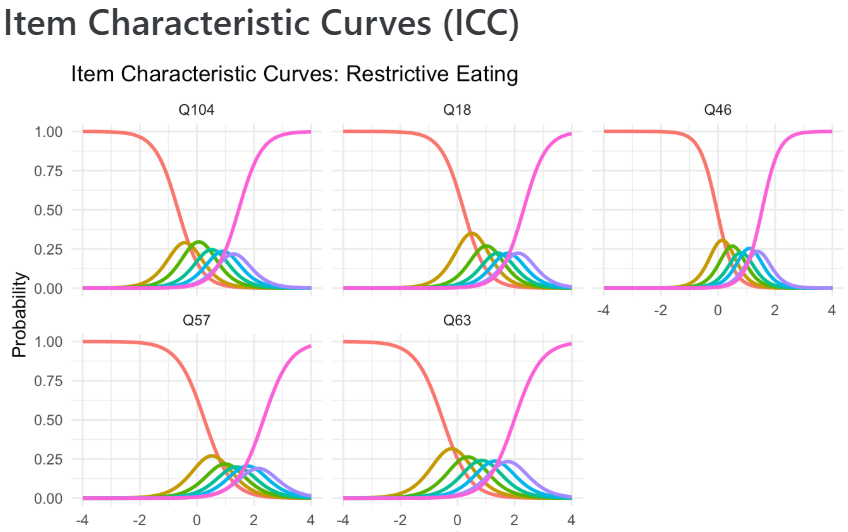
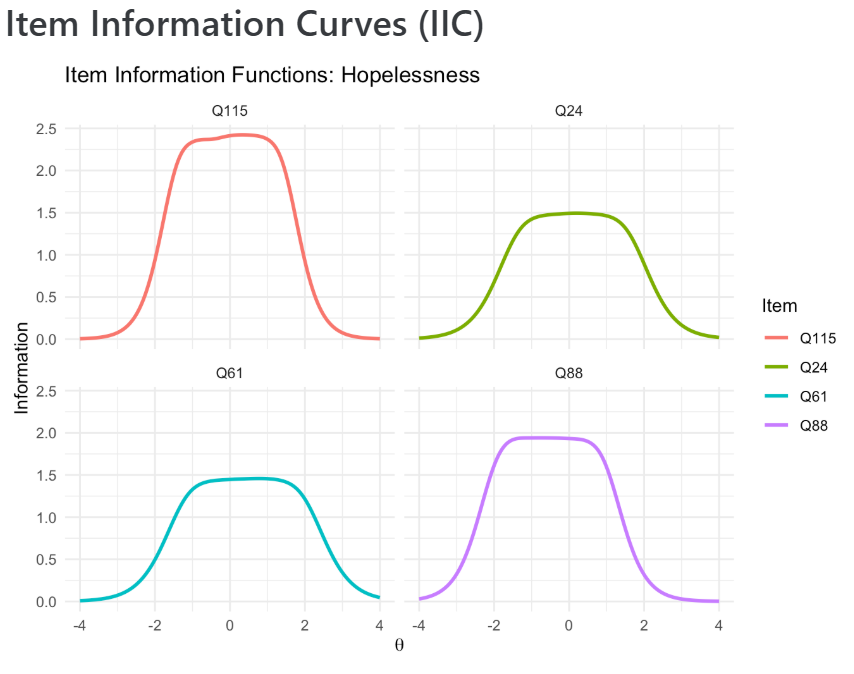
For each question, we analyze how well it functions using Item Response Theory (IRT). This is an advanced method that makes it possible to investigate whether our questions provide good information at different levels of severity. We look at the informational value of each single item and ensure that the questions work well across different groups of users.
We have a comprehensive anonymous calibration database based on over 80.000 Norse Feedback responses, and this collection of data grows month by month. Because all data is anonymized, we can safely analyze it to adjust and fine-tune the instrument while maintaining user privacy. This large amount of data makes it possible to fine-tune our measurements and ensure they have high precision.
We also check for differential item functioning (DIF) in order to ensure the questions reliably function equally for different groups of people, regardless of gender, age, or place of treatment. This means that everyone receives the fairest assessment possible.
How certain can we be about what we measure with Norse Feedback?
A measurement instrument is only useful if it measures what we want precisely. That’s why we conduct extensive analyses of each question and scale to assess their validity. In our tests, we look at:
- Internal consistency: We measure how well the questions in each scale correlate, then refine them to ensure the most precise representation possible.
- Test Information Function: We analyze how much information each scale provides at different levels of severity. This helps us ensure that we have the best possible precision where it matters most.
- Correlation Analyses: We check the relationship between different scales to ensure they measure what they are supposed to, without overlapping too much.
- Anonymous Calibration Database: The analyses are built upon over 80.000 Norse Feedback responses in addition to research data. This gives a robust foundation for assessing the quality of the measurement instruments while respecting user privacy.
- Continuous Updating: Norse Feedback is not a static tool. We evaluate and improve the system continuously based on new research and feedback from our patients and practitioners.
- Clinical User Experience Testing: We regularly evaluate how Norse Feedback works in practice together with patients and practitioners. This ensures that the scales are understandable in everyday clinical use and that we are not dependent on big, anonymous datasets. Feedback from practical usage is crucial to preserve clinical relevance.
We know that precision in measurements matters a lot to both patients and practitioners. That’s why we put emphasis on a perpetual developmental process – we test, refine, and improve Norse Feedback continuously. This ensures that the tool is robust and useful in clinical practice.
How does Norse Feedback compare to other measurement instruments?
Many tools are used to measure health and quality of life. Norse Feedback has been developed specifically for the treatment of mental health and gives a more holistic and detailed picture than many traditional measurement instruments.
What separates Norse Feedback from the rest?
– More specific than EQ-5D
EQ-5D is a widely used tool for measuring general health, but it has limited ability in finding the more complex aspects of mental health. Research shows that when measures from Norse Feedback are added, the explanatory power regarding the patient’s perceived health and quality of life increases significantly. This means that Norse Feedback provides a more detailed picture of how their patients are actually doing.
– Supports and complements standardized tools such as PHQ-9 and GAD-7
PHQ-9 (for depression) and GAD-7 (for anxiety) are widely used tools in the healthcare service, but they only cover part of the whole picture. Norse Feedback captures emotional, cognitive, and behavioral factors and gathers much of the same information as these two measures. Results from Norse Feedback can also be compared to PHQ-9 and GAD-7, and studies show that the most important scales correspond well (with correlations above r = .8). This means that Norse Feedback can be used both alone and alongside established tools.
– Faire measurements for all groups
We have performed Differential Item Functioning (DIF) analyses to ensure that Norse Feedback functions equally for different groups – regardless of age, gender, or treatment status. This means that we actively work to ensure no groups are erroneously assessed, which is an important factor in ensuring the measurement instrument is fair and useful in clinical practice.
Psychometric analyses and data are both published as research articles in peer-reviewed journals, and as internal white papers based on anonymous data.